A dental bridge is a fixed restoration that fills the gap left by a missing tooth. It literally bridges the space — using the teeth on either side of the gap as anchors, with an artificial tooth suspended between them. The result looks and functions like your natural teeth and is cemented permanently in place.
If you're missing a tooth and your dentist has mentioned a bridge as an option, this guide explains exactly how it works, what the procedure involves, how it compares to an implant, and how to care for it long-term.
The visual: Imagine two crowns placed on the teeth on either side of the gap, connected by a false tooth in the middle — all in one solid piece cemented permanently to your teeth. That's a bridge.
Why missing teeth need to be replaced
It's tempting to leave a gap — especially if it's not visible when you smile. But leaving a missing tooth unreplaced causes problems over time:
- Neighboring teeth gradually tilt and shift into the gap
- The tooth opposing the gap may over-erupt (grow longer) without something to bite against
- Bone in the gap area begins to resorb (shrink) without stimulation
- Changes to your bite can cause jaw pain and uneven wear on remaining teeth
- Gaps can be harder to keep clean, increasing decay and gum disease risk
Types of dental bridges
Traditional Bridge
Most common. Two crowns on anchor teeth with a false tooth between them. Requires reshaping anchor teeth.
Maryland Bridge
Metal or porcelain wings bonded to the backs of adjacent teeth. Less invasive — no crowns needed. Best for front teeth.
Implant-Supported Bridge
Anchored by implants instead of natural teeth. Ideal when multiple adjacent teeth are missing.
The bridge procedure
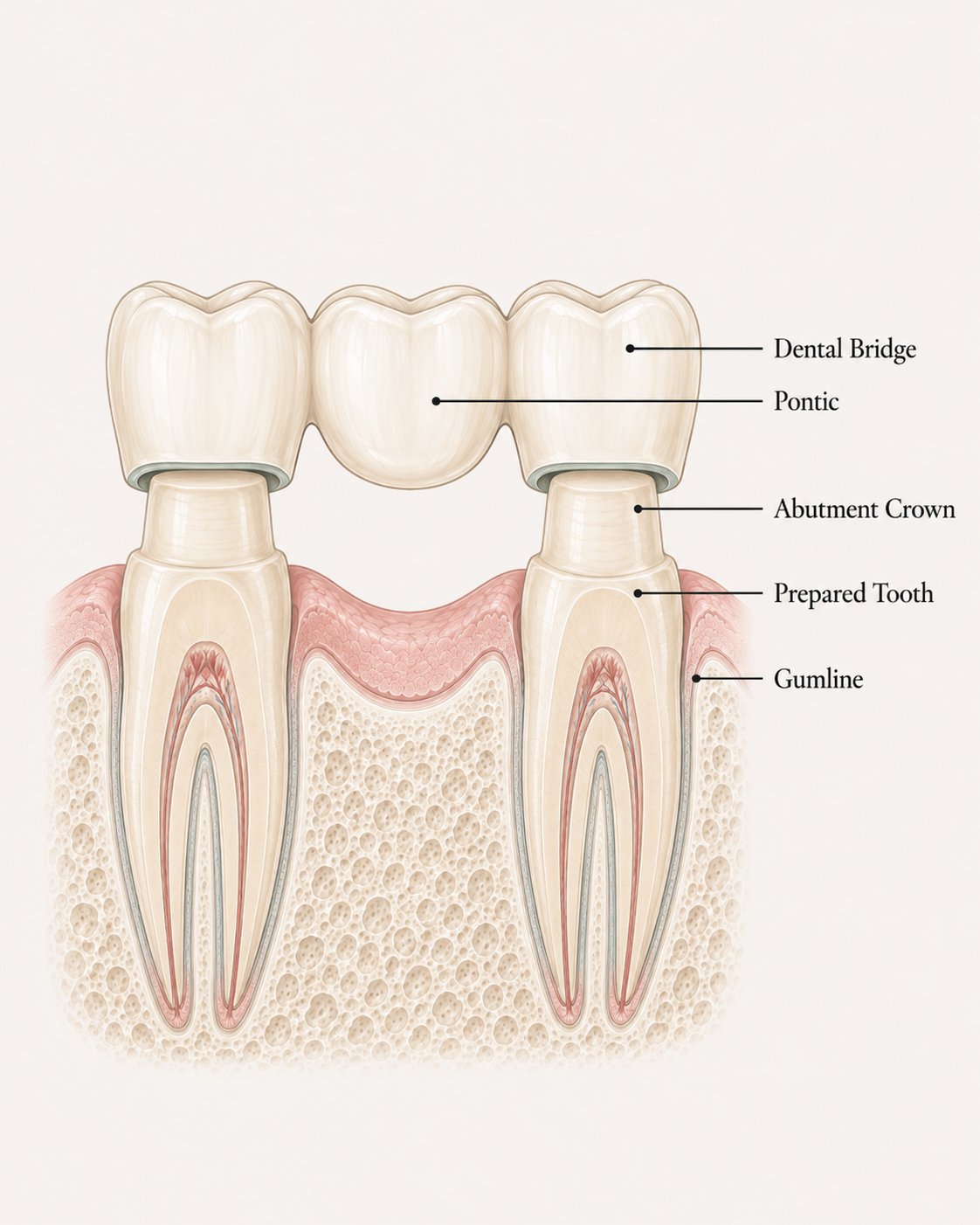
A traditional bridge takes two appointments about 2 weeks apart.
Appointment 1 — Preparation
- Anesthesia. The teeth on either side of the gap (called abutment teeth) are numbed.
- Reshaping. The abutment teeth are filed down on all sides to create space for the crowns that will anchor the bridge.
- Impression. A mold or digital scan is taken and sent to the dental lab to fabricate your custom bridge.
- Temporary bridge. A temporary restoration protects the prepared teeth while the permanent bridge is being made.
Appointment 2 — Placement
- The temporary bridge is removed and the fit, color, and bite of the permanent bridge is checked.
- Once everything is correct, the bridge is permanently cemented onto the abutment teeth.
Caring for your bridge
The most important maintenance step with a bridge is cleaning underneath the false tooth (pontic). Food and bacteria can accumulate in this area and cause decay in the anchor teeth.
- Use a floss threader, interdental brush, or water flosser to clean under the bridge daily
- Brush twice daily paying attention to where the crowns meet the gumline
- Avoid biting hard objects — ice, hard candy — that could crack the bridge
- See your dentist regularly for professional cleanings
How long does a bridge last?
A well-maintained bridge typically lasts 10 to 15 years. Some last 20 years or more. The main reasons bridges fail are decay in the anchor teeth and gum disease. Good oral hygiene — especially cleaning under the bridge daily — is the key to longevity.
The bottom line
A dental bridge is a proven, durable way to replace a missing tooth. It restores function, prevents neighboring teeth from shifting, and looks completely natural. For patients who aren't candidates for an implant or prefer a non-surgical option, a bridge is an excellent long-term solution.
Read the full article
Create a free SmileSmart account to unlock every article instantly.