A dental filling is one of the most common procedures in dentistry. If your dentist has found a cavity and recommended a filling, this guide walks you through exactly what that means, what happens during the appointment, and what to expect afterward.
Most people who dread fillings are reacting to a childhood memory or a story they heard — not the reality of modern dentistry. With proper anesthesia, a filling is typically quick, comfortable, and unremarkable.
The short version: A filling removes decayed tooth material and replaces it with a durable material that restores the tooth to normal function. It stops decay from spreading and saves the tooth.
Why fillings are needed
A filling is needed when tooth decay — a cavity — has created a hole in your tooth. Decay happens when bacteria in your mouth produce acid that eats through the enamel and underlying tooth structure. Left untreated, a cavity grows deeper, eventually reaching the nerve and requiring a root canal or extraction.
A filling catches the problem early, removes the damaged material, and seals the tooth before the decay progresses. It is far simpler and less expensive than the alternatives that become necessary if you wait.
Types of filling materials
Composite Resin
Tooth-colored. Bonds directly to the tooth. The most common choice for visible teeth. Looks completely natural.
Amalgam (Silver)
Durable silver alloy. Less commonly used now but still valid for back teeth. Less expensive than composite.
Ceramic / Gold
Most durable. Used for larger fillings or inlays. More expensive but can last 15–30 years.
Composite resin is the most common choice today because it matches your tooth color, requires less removal of healthy tooth structure, and bonds chemically to the tooth for a strong seal.
What happens during the appointment
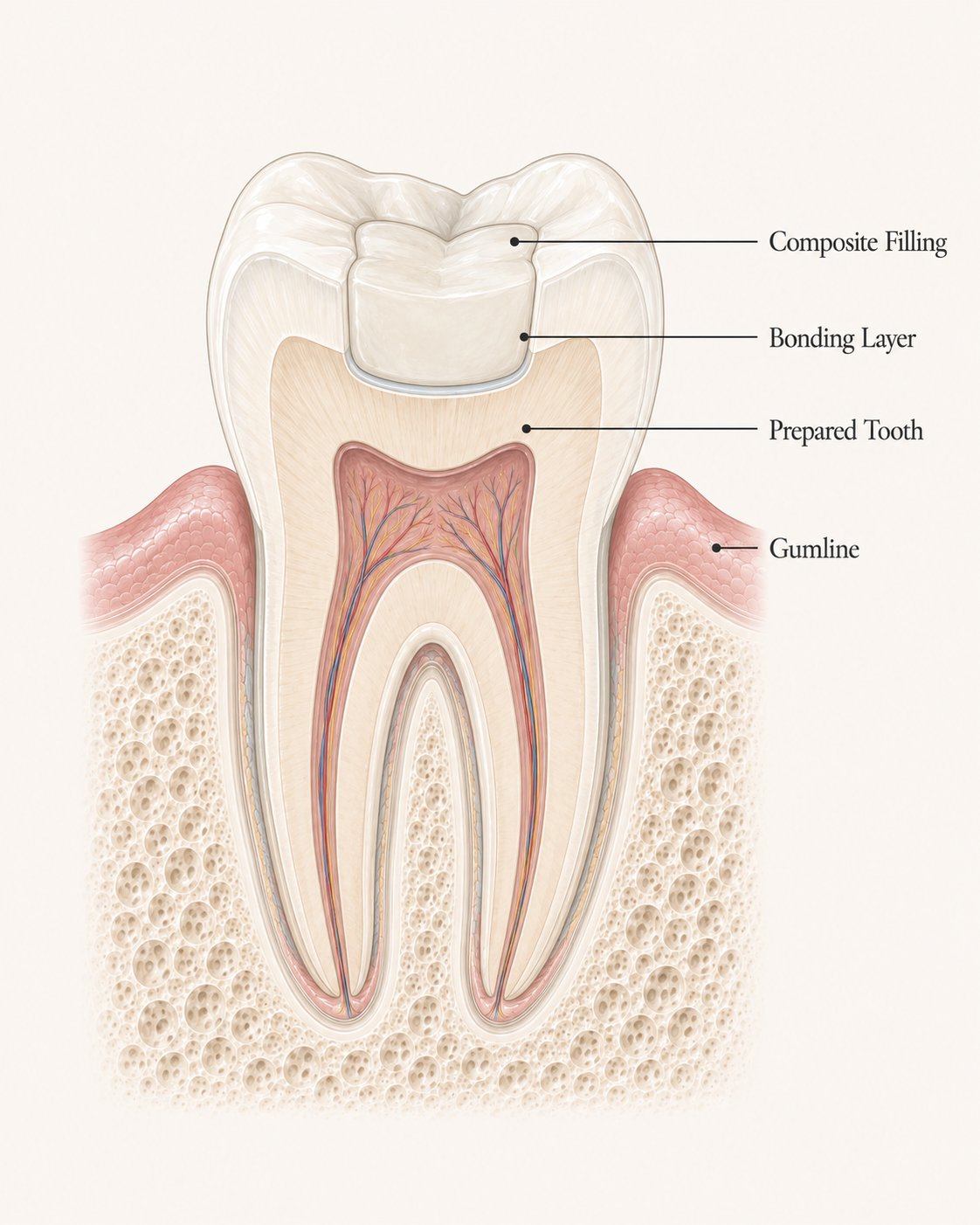
- Anesthesia. The area around the tooth is numbed with a local anesthetic. You will feel pressure but not pain.
- Decay removal. The dentist uses a drill or laser to remove the decayed portion of the tooth.
- Tooth preparation. The cavity is cleaned and shaped to hold the filling material securely.
- Filling placement. For composite fillings, the material is applied in layers, each hardened with a curing light. For amalgam, it is packed and shaped.
- Polishing and bite check. The filling is smoothed and your bite is checked. If it feels high, the dentist adjusts it.
After the filling
- Numbness from anesthesia lasts 1 to 3 hours after the appointment
- Sensitivity to cold, heat, or pressure for 1 to 2 weeks is normal — especially with composite fillings
- If your bite feels off after the numbness wears off, call your dentist for a small adjustment
- Avoid very hard or sticky foods for 24 hours
The bottom line
Fillings are routine. They stop decay in its tracks and restore normal function. If your dentist recommends one, do not delay — a small filling today prevents a root canal or extraction tomorrow.
Read the full article
Create a free SmileSmart account to unlock every article instantly.