A mouthguard is a removable appliance worn over the teeth to protect them from damage. Depending on what it's designed for, it may be called a night guard, an occlusal guard, a sports guard, or a splint — but the principle is the same: it protects your teeth from forces that would otherwise cause wear, fracture, or injury.
If your dentist has recommended a mouthguard, it's usually because they've spotted signs that your teeth are under stress — either from grinding, clenching, or impact risk during sports.
An important distinction: A night guard protects teeth from grinding and clenching during sleep. A sports guard protects teeth from impact during athletic activity. Both are custom-made for your mouth and significantly more effective than over-the-counter options.
Why night guards are needed — bruxism
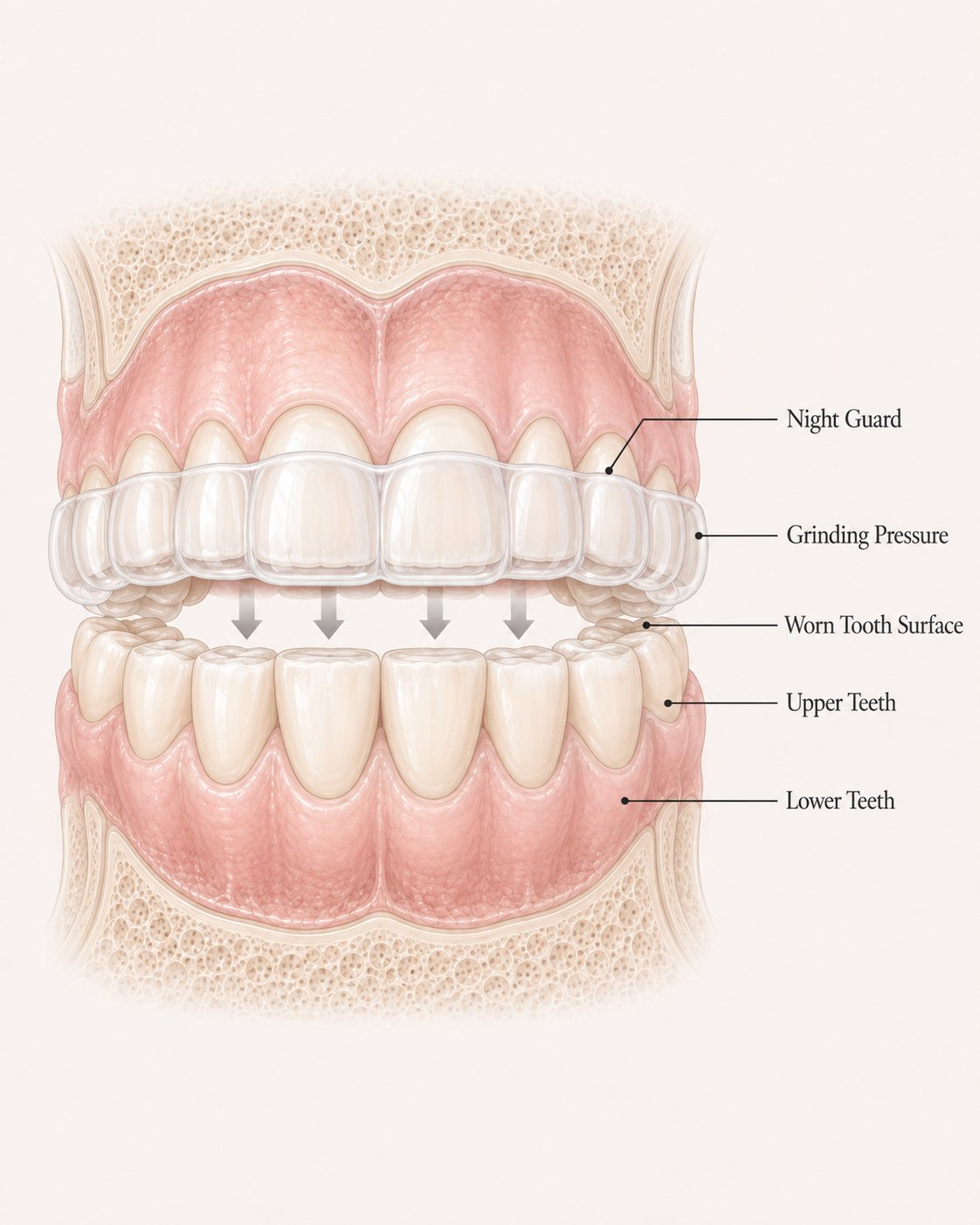
Bruxism is the clinical term for grinding or clenching your teeth — most commonly during sleep when you have no conscious control over it. Many people who grind their teeth don't know they do it until a dentist shows them the wear patterns on their teeth or a partner tells them they can hear it at night.
Left untreated, bruxism causes:
- Flattened, worn-down tooth surfaces — especially on the back molars
- Chipped or cracked teeth
- Tooth sensitivity from enamel loss
- Jaw pain, headaches, and facial muscle soreness
- Damaged dental work — fillings, crowns, and veneers can fracture under repeated grinding forces
Signs you might be grinding
- You wake up with a sore jaw or headache
- Your teeth feel sensitive in the morning
- A partner has heard grinding sounds while you sleep
- Your dentist shows you flattened or worn biting surfaces
- You notice you clench your jaw during the day when stressed
Don't ignore it
The grinding forces during sleep can be 6 to 10 times stronger than normal chewing. Over time, this level of force destroys tooth structure that cannot regenerate. A night guard doesn't stop the grinding behavior — but it absorbs and redirects the force to protect your teeth.
Sports mouthguards
A sports mouthguard is worn during contact sports — football, basketball, hockey, boxing, martial arts — to protect teeth and jaw from impact. A custom-made sports guard fits precisely over your teeth and provides significantly better protection than boil-and-bite guards from a sporting goods store.
Dental injuries in contact sports are common and expensive. A custom mouthguard is a small investment that prevents knocked-out teeth, fractures, and lip or tongue lacerations.
Getting a custom guard
- Impression or digital scan. Your dentist takes a mold or 3D scan of your teeth to create a model the guard will be fabricated on.
- Lab fabrication. The custom guard is made from the model — typically over 1 to 2 weeks for a night guard, faster for sports guards.
- Fitting appointment. The guard is checked for fit, adjusted if needed, and you receive instructions for care and use.
Caring for your guard
- Rinse with cool water after each use
- Clean with a soft toothbrush and mild soap — not toothpaste, which is abrasive
- Store in a ventilated case to prevent bacterial growth
- Bring it to your dental appointments so your dentist can check for wear
The bottom line
A custom mouthguard is one of the best investments you can make in your dental health. It protects existing dental work, prevents expensive repairs, and for night grinders, can dramatically reduce jaw pain and morning headaches.
Read the full article
Create a free SmileSmart account to unlock every article instantly.